
Mobile Ophthalmic Assessment Options For Decentralized Clinical Trials
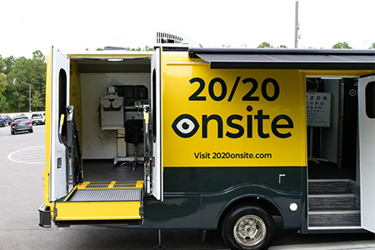
Objective ophthalmic endpoints like visual acuity, OCT, and intraocular pressure remain difficult to fully decentralize: they require calibrated equipment and trained staff that participants can't replicate at home. Yet routing participants to a shrinking pool of ophthalmologists, particularly outside metro areas, adds burden and risks dropout. Three point-of-need delivery models address this gap by bringing assessment capability to participants instead: a fully mobile clinic for single-visit studies spread across many sites, a semi-permanent exam space for multi-year studies concentrated at one or two locations, and equipment and certified staff brought into a site's own existing rooms when specialized capacity, not space, is the constraint.
Matching model to study design keeps objective ocular data consistent across sites while meeting the data integrity and electronic-records standards regulators expect of decentralized and hybrid trials. Teams designing an ophthalmic protocol should weigh their visit cadence, site footprint, and endpoint mix against these three delivery models to determine which approach, or combination, resolves their specific site and staffing gaps.
Get unlimited access to:




Enter your credentials below to log in. Not yet a member of Clinical Leader? Subscribe today.