ABOUT US
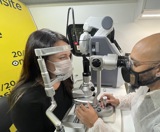
20/20 Onsite is a specialty vendor for sponsors and CROs conducting clinical trials with ocular endpoints, providing end-to-end ophthalmic trial consultation, clinical field execution, and ongoing support. Through a single-call accountability model, 20/20 Onsite helps sponsors de-risk ocular endpoint complexity and increase the likelihood of on-time, on-budget, protocol-adherent trial success.
Its proprietary point-of-need service delivery model reaches participants where they live, work, or congregate, reducing patient burden, improving retention, and supporting diverse enrollment strategies. Backed by proven expertise, nationwide experience at scale, and validated regulatory rigor, 20/20 Onsite has supported more than 45 clinical trials, served over 100,000 patients, and consistently delivered Net Promoter Scores above 95.
FEATURED ARTICLES
-

Exam room design and staffing shape data quality in ocular trials. See what a properly built space needs to include.
-

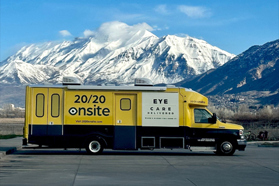
Eye exams need calibrated equipment and trained staff. These three mobile delivery models bring that capability directly to your trial participants.
-

Ophthalmic trials lose participants at twice the rate of other studies. Point-of-need assessment delivery cuts dropout from 30% to 9% and reduces travel burden by 80.6%, protecting your endpoint data.
-

Discover how standardized ocular biomarkers and point-of-need delivery safeguard data integrity in complex neurology trials while keeping patients engaged.
-

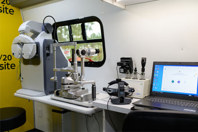
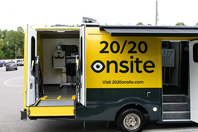
By deploying mobile clinics equipped with specialized diagnostic tools and trained technicians, sponsors can execute protocol-adherent assessments right in the participant's community.
-

Discover how specialized endpoint execution closes critical gaps in ophthalmic trials, improving assessment consistency, protocol adherence, data quality, and participant retention.
-

Reduce operational risk in ophthalmic trials with point-of-need execution. Discover how mobile clinics, specialized teams, and single-call accountability protect endpoint quality and study timelines.
-

Dropout in retinal trials is often a logistical failure. Reducing travel burden and bringing specialized care to the patient can slash attrition rates and secure critical trial timelines.
-

High screen failure rates and patient dropout often stem from preventable imaging errors. Learn how proactive quality control and patient-centric logistics secure critical retinal trial data.
-

Standardizing ocular endpoint execution reduces participant dropout and eliminates data variability. Specialized oversight secures clinical timelines and ensures high-quality, submission-ready data.








VIDEOS AND WEBINARS







CONTACT INFORMATION
20/20 Onsite
29 Garden Street
Everett, MA 02149
UNITED STATES
Phone: 617-812-9453
Contact: Jessica McKenzie, Vice President, Life Sciences
FEATURED PRODUCTS



FEATURED CASE STUDIES
-

Deconstruct the enrollment bottleneck in an ophthalmic gene therapy trial, discovering how point-of-need pre-screening cuts site activation delays and accelerates clinical development timelines.
-

Discover how a biopharmaceutical company integrated urgent mid-trial mandates across 65 sites, cutting standard onboarding timelines in half while preserving critical enrollment milestones.
-

Community-based screenings identify undiagnosed eye disease at high rates, creating a scalable, high-trust pathway for early intervention and improved clinical research recruitment.
-

A Mobile Clinical Suite (MCS) proved to be the solution that Syneos Health needed to resolve their Phase 1 study trial challenges with comprehensive eye exams.
-

A contract research organization formed a partnership to address significant challenges during a Phase 1 clinical trial for a corneal disease treatment through the use of a Mobile Vision Pod.
-

20/20 Onsite, American Diabetes Association and Genentech collaborated on an event to provide immediate diagnostic services, including retinal imaging and visual acuity assessments, directly on-site.
-

This study highlights the transformative impact of point-of-need care on patient access, focusing on pediatric cystic fibrosis (CF) patients requiring essential eye exams.
-

Discover how the implementation of mobile vision clinics (MVCs) was used to enhance efficiency in a Phase 1 clinical trial.
-

During the COVID-19 pandemic, Applied Genetic Technologies Corporation (AGTC) faced significant hurdles in enrolling participants due to travel restrictions and site limitations.
-

Collaboration was key for Company W to overcome challenges with an FDA-mandated ocular substudy, including limited resources for ocular assessments and logistical difficulties