
My View: The Clinical Trials Technology Congress

By Dan Schell, Chief Editor, Clinical Leader
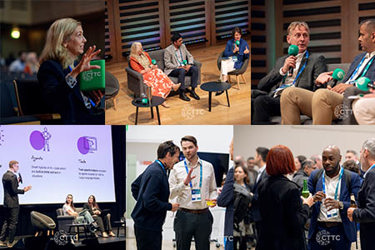
After being focused on the clinical trials industry for the past three years, I think I’m still more of a “glass half full” guy when it comes to attending conferences. Sure, there’s lots of redundancies when it comes to the topics covered in sessions across the industry, but I tend to focus on those small positive takeaways rather than dwell on the negatives. Which leads me to the inaugural Clinical Trial Technology Congress (CTTC) in London.
Now, full disclosure: Not only was Clinical Leader a sponsor for this show, I was on the agenda for this conference, albeit for only about 15 minutes when I interviewed Matt Bonam from Evinova. Thus, I had the pleasure of communicating with show organizers multiple times months ahead of time. And although this was the first CTTC, it wasn’t the first conference for Open Pharma Research, which has years of experience with their successful “Lab of The Future Congress.”
Held at King Place in London, the nearly 200 attendees, in my opinion, took advantage of the intimacy of this event by maximizing the networking opportunities in-between sessions. (There is, indeed, something to be said about a conference with a smaller footprint.)
I stayed for a day and a half of presentations that included topics such as:
- AI-assisted protocol design
- connected ecosystems for clinical operations
- real-time operational visibility
- digital patient engagement
- eSource and EHR-to-EDC integration
- social media listening for patient-focused drug development
- the evolving European regulatory framework surrounding digital tools in trials.
Orchestration Is The New Buzzword
One of my favorite sessions was a strong panel that included Astrid Scherer, head of product development and process excellence clinical development, at Bayer. During her solo part of the session, she focused on what she described as an “operational inflection point” in clinical trial delivery. Her point was one that I’ve heard many times before: increasing protocol complexity, PI shortages, resource constraints, and pressure to accelerate timelines are collectively forcing sponsors to rethink traditional operating models. But, instead of the expected “AI will fix everything!” message, she framed the future operating model around five foundational capabilities:
- intelligent operations
- connected ecosystems
- patient-centric delivery
- real-time visibility
- scalable execution.
Her argument was essentially that technology itself is no longer the differentiator; orchestration is. In fact, I had never heard the word orchestration used so many times at a conference. She said that sponsors now have more systems, data, and dashboards than ever, but have not figured out ways to connect them that will actually simplify execution for sites and study teams.
She went on to discuss how AI is beginning to move from hype to operational reality inside ClinOps. Again, not a big surprise, but she did give some examples such as AI-assisted protocol design, predictive enrollment forecasting, automated query management, and real-time risk identification. Bayer projected that these approaches could potentially reduce protocol amendment cycle times by 30%, improve enrollment speeds by 25%, and reduce data queries by 60% through AI-assisted review processes. Those are some pretty big predictions, so that part really stood out to me.
6 Portals For 1 Trial Is … Too many
That same “reduce complexity, not add to it” theme also surfaced during the session I moderated with Matt Bonam. He noted that the industry still tends to bolt digital tools onto existing protocols after studies are already designed, which often creates even more burden for both patients and sites. One example he shared involved a heart failure study that ended up requiring six apps and six separate portals for sites.
Bonam’s presentation focused heavily on designing trials around patient and site realities rather than simply digitizing old processes. He shared research suggesting that 70% of assessments in trials could potentially be performed remotely, while 25% to 40% of visits could be eliminated through better study design and validated digital technologies. He also presented a fascinating slide outlining the “14 moments that matter to patients” throughout the clinical trial journey, including anxieties around screening, frustration with consent processes, mounting fatigue during participation, and the feeling many patients have at trial conclusion that they are suddenly “left in the dark.”
Regulators And Patients Enter The Conversation
There was also a strong regulatory undercurrent throughout the conference. Lisbeth Bregnhoj of the Danish Medicines Agency discussed the growing scrutiny around AI use in clinical trials and walked attendees through common inspection deviations regulators are already seeing, including inadequate risk assessments, sponsor modification of data without PI approval, and weak audit trail controls. Her presentation served as a reminder that while the industry loves talking about innovation, regulators are increasingly focused on governance, documentation, and accountability.
Another interesting session came from Thierry Escudier of the Pistoia Alliance, who discussed the organization’s POMELO initiative — Protocol for Social Media Listening Online — which is exploring how social media-derived patient insights could eventually contribute to patient-focused drug development and real-world evidence generation. The presentation acknowledged that while pharmaceutical companies are increasingly interested in using social media listening to better understand patient experiences, major questions remain around data reliability, standardization, and regulatory acceptance.
Escudier’s presentation stood out because it highlighted an area the industry has talked about for years without fully operationalizing it — patients are already openly discussing treatment experiences, symptoms, adherence issues, and quality-of-life concerns online. The question now is whether the industry can responsibly structure and validate that information in ways regulators will eventually trust. The Pistoia Alliance appears to be trying to build that bridge before sponsors start rushing ahead independently.
And yes, there was more. More sessions, more speakers, more networking … and more good food (that’s always important, especially at a first-time conference)! Was it overcast, slightly cold, and a bit rainy at points? Well, yeah, this was London, after all! But the general consensus I got from talking with anyone who would listen was that the future of CTTC is far from gloomy. Namely, people are looking forward to this one next year.