
Small Biotech Can Outsource The Work, But Not The Thinking

By Dan Schell, Chief Editor, Clinical Leader
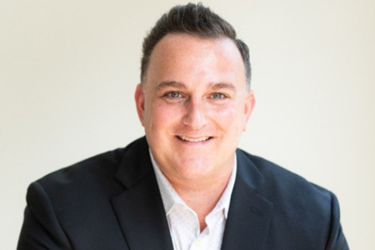
I’ve known Robert Goldman for about three years, and if you’ve ever met him, you probably know that asking him a question rarely produces a cautious, carefully hedged answer.
That’s one of the reasons I enjoy talking with him.
Goldman, VP of clinical development at Contraline, recently took that same approach to the stage at OCT Southern California. Contraline is developing a long-lasting, non-hormonal contraceptive for men, and Goldman is now preparing for a Phase 3 program that could eventually support an NDA submission. His OCT keynote focused on how biotechs can shift resources to improve efficiency while responsibly adopting AI in clinical trials. When we spoke before the conference, however, our conversation quickly revealed that those two subjects — outsourcing and AI — have more in common than might initially appear. Both promise efficiency. Both can allow a small biotech to accomplish things it could never adequately staff internally. And both create problems when companies confuse handing off work with handing off responsibility.
“Outsource the work,” Goldman told me. “Just don’t outsource the thinking and the ownership or the accountability for that matter.”
For small biotechs, that distinction could determine whether being lean becomes an advantage or a liability. (Watch for my Clinical Leader Live webinar on this subject on November 18.)
Don’t Fool Yourself Into Believing “You’ve Got This.”
Goldman is currently living the scenario he discussed at OCT. Contraline is preparing for a Phase 3 study with a relatively small organization behind it, forcing the company to decide what capabilities it needs internally and what can be obtained from CROs and other partners.
Large pharma, he argues, has enough infrastructure to absorb some inefficiency. A small biotech generally does not. A vendor has other customers. A CRO may have hundreds of sponsors. For a biotech like Contraline, “I’ve got one shot on goal. That’s it,” Goldman said.
Of course, the “build-vs-buy” decision is one that plagues any size sponsor, and we all know it’s difficult to internally build a lot of your drug dev infrastructure. Hell, sometimes it can be just as difficult to outsource certain functions, especially when you factor in all of the oversight needed. Goldman’s been around the block, so he knows the downside to leaning into hubris when considering your internal capabilities. He was straightforward in his advice: take a close and hard look at which capabilities you can rent and which responsibilities you have to own. And remember, “Lean does not mean hollow,” he added.
At Contraline, that means maintaining internal expertise capable of overseeing critical outsourced functions such as clinical operations, data management, and regulatory affairs. Goldman doesn’t believe the internal organization needs to duplicate the CRO’s infrastructure, but there needs to be enough expertise inside the sponsor to recognize when something is going wrong.
His rule of thumb: If the CRO has a clinical lead, he wants appropriate clinical expertise internally. If it has a data manager, he wants someone inside Contraline capable of overseeing data management.
That approach inevitably raises an uncomfortable question for small biotechs: How do you know whether the people a CRO puts in front of you can actually do what they say they can do? Afterall, like he said, “A resume is not a deliverable. The output is what matters.”
Meet The Team That Will Actually Run The Study
Goldman believes sponsors spend too much time validating credentials and not enough time validating capability. During the selection process, he wants prospective partners to demonstrate how they would respond to realistic situations, identify risks, and solve problems. That philosophy extends directly into CRO bid defense. “Introduce me to the team that runs my study, not the team that wins the business,” he said.
Anyone who has spent much time discussing sponsor-CRO relationships has heard some version of this complaint. The polished A-team participating in a bid defense isn’t necessarily the team that ultimately executes the trial. Goldman wants to attack that problem contractually. For example, for Contraline’s Phase 3 study, he wants the master services agreement (MSA) to give the company approval rights over CRO resources assigned to the study, including replacements when someone leaves.
That is likely a more aggressive stance than many sponsors may be comfortable taking. But, Contraline also has some leverage that other small biotechs may not possess because of the novelty of its male contraceptive program. Goldman readily acknowledges that.
Still, I think the broader point applies well beyond Contraline. Small biotechs sometimes approach large CROs as though they should simply be grateful that the CRO wants their business. Goldman thinks they should recognize that they have negotiating power, too.
And sometimes the right outcome is for a CRO to walk away.
Goldman described one CRO that declined to pursue Contraline’s study because it did not believe it could adequately deliver what the company needed. Rather than being disappointed, Goldman respected the decision. That may be one of the more overlooked signs of a potentially good partner: knowing when it shouldn’t take your money.
AI Should Find Problems, Not Just Save Hours
Goldman’s thinking about AI follows a surprisingly similar path. He actually has raised concerns about AI before. In a March Clinical Leader guest column, he warned that AI tools are already being used at research sites without sponsors necessarily knowing how study information is being handled. But that shouldn’t be mistaken for opposition to the technology. Goldman describes himself as “very bullish on AI.” He sees opportunities in risk management, sponsor oversight, cross-source data corroboration, and identifying signals before they become significant operational problems.
What he’s concerned about is what the industry chooses to measure. “AI should help us see the problem sooner, not simply write things faster,” he said.
That sentence gets at something I think ClinOps organizations should be asking as they evaluate the flood of AI tools now coming at them. Saving 10 hours drafting something certainly has value. But where did those 10 hours go? If those hours are subsequently consumed validating the AI system, reviewing its output, correcting errors, establishing governance, or documenting how it was used, the calculation gets considerably more complicated. As Goldman put it, “Task efficiency doesn’t mean development efficiency.”
There is also a much less theoretical problem. Goldman used the example of a busy coordinator who needs to prepare for an SIV. The coordinator uploads sponsor materials into a public generative AI tool and asks it to summarize them. There is no malicious intent. The person is simply overwhelmed and has discovered a tool that can make the job easier. But good intentions don’t answer questions about intellectual property, retention, secondary use, security, or ownership of the resulting output.
That means AI governance cannot exist solely in training decks and corporate policies. He believes sponsors need to address those questions contractually with vendors: What data can be entered? How is it retained? Is it used for model training? Who owns the output? What audit rights does the sponsor have? What happens to the information when the relationship ends? Those aren’t particularly exciting AI questions, but they may be among the most important ones.
The One Job Goldman Won’t Outsource
Near the end of his OCT presentation, Goldman planned to identify one job he will never outsource: his own. That doesn’t mean doing every operational task himself. Quite the opposite. A lean biotech has to outsource because it simply cannot employ everyone required to execute a large clinical program. But outsourcing doesn’t change where accountability ultimately resides.
That may be the connection between the two seemingly different halves of Goldman’s presentation.
A CRO can give a small biotech capabilities it could never afford to build internally. AI can help people identify risks, analyze information, and perform certain tasks faster. Both can make a lean organization substantially more capable. Neither gives its leaders permission to stop understanding the work.
Goldman believes ClinOps leaders still have to know enough of the details to recognize when something is wrong, make a decision quickly, and own what happens next. For all the discussion in this industry about doing more with less, that may be the part of “less” small biotechs can’t afford to eliminate.