
What ClinOps Gets Wrong About Pediatric Trials

By Dan Schell, Chief Editor, Clinical Leader
I'm afraid a lot of you won't read this article, and that would be a shame … and a mistake.
You see, I’m guessing some of you will see "pediatric trials" in the headline and immediately conclude it has nothing to do with the work you do. Others will see that I'm interviewing two leaders of patient advocacy organizations and assume this is another story about how difficult it is for patients and families to participate in clinical trials. You may think you've heard those arguments before and that there's nothing here that will help you run a better study.
I think both assumptions are shortsighted.
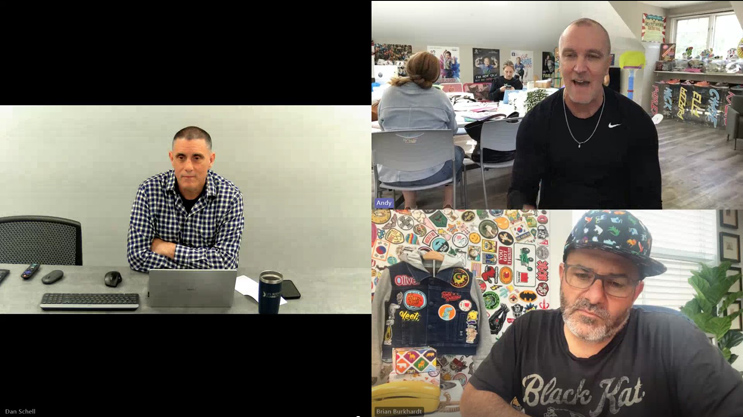
I first met Brian Burkhardt and Andy Shepperd at this year's MAGI conference. In Brian's case, I felt like I already knew him. If you've attended enough industry conferences, you've probably seen him wearing a colorful sport coat covered with patches representing children and families impacted by pediatric cancer.
The two had just delivered a keynote titled “Stronger Together: Reimagining Pediatric Patient Advocacy Through Collaboration, Creativity, and Community.” What struck me was how different it felt from most conference presentations. There were no discussions about AI roadmaps, startup valuations, or the latest technology platform. Instead, they spent their time talking about families, trust, and the realities of navigating a life-altering diagnosis. By the time the presentation ended, I realized this wasn't really a story about pediatric trials. It was a story about what happens when clinical research is viewed through the eyes of the people expected to participate in it.
The organizations they lead, Oliver Patch Project and Project Outrun, have built communities around supporting pediatric cancer families. Their perspectives align with themes Clinical Leader has explored previously in Mom And CCRP Identifies Must-Haves For Pediatric Trials and LLS Is Working To Change The Pediatric Clinical Trial Model.
Patient Centricity Can't Be A Marketing Campaign
At one point during our interview, Burkhardt became visibly animated (i.e., he was pissed off) when discussing patient engagement. “Don't cry to me that you care and you are concerned with patient centricity, patient values, patient-led studies ... whatever,” he said. “The fact is, you want it when it makes you look good, but then you dismiss it at the end. That's bullshit.”
I appreciated Brian’s candor. It was refreshing because I could tell it wasn't delivered as some preplanned/preauthorized soundbite. It came from years of watching organizations talk about supporting families while continuing to measure success primarily through enrollment, retention, and completion metrics.
And don’t get me wrong; Burkhardt understands the value of metrics, in general. His point is that families experience trials differently than sponsors do. To a sponsor, retention may be a KPI. To a family, participation is part of a much larger journey involving fear, uncertainty, hope, and sacrifice.
He believes too many organizations still approach engagement as a project rather than a commitment.
Let’s pause here, because I want that statement to sink in. It’s something both he and Andy hammered home during our interview.
Programs are launched, messaging is developed, and patient-centric language appears in presentations. But when budgets tighten or priorities shift, families can feel those efforts fade. Trust, however, is cumulative. It is built slowly and lost quickly.
His comments reminded me of similar conversations I’ve had over the years around diversity initiatives. Rarely, the challenge is simply generating enthusiasm. The real challenge is sustaining commitment long after the announcement has been made.
Retention Is Transactional. Support Is Relational
One of the most memorable lines from the interview came from Shepperd, who said, “Retention is transactional. Support is relational.” Again, that statement became the foundation for nearly everything else we discussed.
Burkhardt described how the Oliver Patch Project uses milestone patches to recognize children for the challenges they overcome during treatment. The patches themselves are symbolic. What matters is the acknowledgment. Families receive a reminder that someone sees what they are enduring and recognizes their progress. Those lessons eventually influenced how he thinks about clinical trial participation. Families who feel supported are more likely to stay engaged. Families who feel disconnected often struggle.
Shepperd shared a similar perspective. His organization is a pediatric cancer nonprofit that provides, among other things, custom-made sneakers/shoes for the kids and their siblings. Its programs are built around movement, encouragement, and community. For instance, he described a child working to clear chemotherapy by walking hospital hallways. The physical activity supported treatment goals, but it also reinforced confidence, resilience, and purpose.
Neither man views these programs as “feel-good” activities. They view them as practical interventions that help families navigate difficult experiences. Their argument is that clinical trials can benefit from the same mindset.
Too often, retention efforts begin when participants appear at risk of leaving a study. Burkhardt and Shepperd would argue that retention begins much earlier. It starts with creating trust, establishing relationships, and ensuring families feel they belong from the moment they enter the process.
It’s Not About A Protocol, It’s About Hope
One of the strongest moments of the conversation came when Shepperd discussed families searching for clinical trials. “Families are so tired of filling out applications for hope and then not meeting protocols,” he said. That line captures a reality many ClinOps professionals rarely witness directly. Eligibility criteria are essential. Protocol requirements exist for good scientific reasons. Yet families often experience those decisions emotionally rather than operationally. A rejected application is not simply an eligibility outcome. It can feel like another lost opportunity.
Shepperd described families desperately searching for options while trying to understand increasingly complex information. This goes way beyond just informed consent forms. Many don't encounter trials until they have exhausted other treatment paths. By then, they are overwhelmed, exhausted, and searching for reasons to keep believing there may be another possibility.
The education gap remains enormous. Both men argued that families need clearer information about what trials are, when they should be considered, and what participation actually means. Perhaps most importantly, they believe that education must come from people who families trust.
As Shepperd noted, there is a disconnect between the people designing studies and the people expected to participate in them. Sponsors can explain protocols. Physicians can explain treatment options. But only another parent can explain what it actually feels like to walk through the experience. Those conversations often carry a different kind of credibility.
Community May Be The Missing Piece
Throughout both the keynote and our interview, the word community surfaced repeatedly. Sure, this is nothing new, especially when talking about improving diversity in trials. You need to be in touch with the communities where these populations live.
That’s not what these guys were talking about.
Instead of a physical location, they’re talking about the shared bond created by these families’ similar experiences. That’s why Shepperd talked about the importance of connecting families that are considering a trial with families already participating. Those conversations often provided reassurance that brochures, websites, and educational materials could never fully replicate.
That observation highlights an important limitation within clinical research. Sponsors and sites face legitimate restrictions regarding privacy and patient interactions. But, advocacy organizations can often bridge that gap by creating trusted environments where families can learn from one another.
Takeaways For ClinDev And ClinOps
Near the end of our conversation, I asked both men what advice they would give a clinical development team designing a pediatric protocol. Neither started with technology, endpoints, or operational efficiency. Instead, they talked about bringing together advocacy groups, parents, policy experts, community leaders, and others who understand the lived experience of participating in research.
They also challenged sponsors to rethink how success is defined. Bringing a drug to market is one measure of success. Families, though, often define success differently. They want to know they were supported, respected, informed, and treated with dignity throughout the process.
Burkhardt offered another perspective that stuck with me. Many families participate because they hope their experience will help future children, even if it does not ultimately help their own. The desire to create a legacy and contribute to something meaningful can be a powerful motivator.
Remember, you shouldn’t view this article or my interview with these guys as a discussion about pediatric trials. The challenges Burkhardt and Shepperd described exist across oncology, rare disease, neurology, immunology, and virtually every other therapeutic area.
Their message was remarkably simple: Stop viewing engagement as a transaction and start viewing it as a relationship.
Clinical research has spent years talking about patient centricity. The challenge now is turning those words into actions that patients and families can actually feel. If that happens, better enrollment and retention may simply be the byproduct.