
When Clinical Trials Don't Stop For War

By Dan Schell, Chief Editor, Clinical Leader
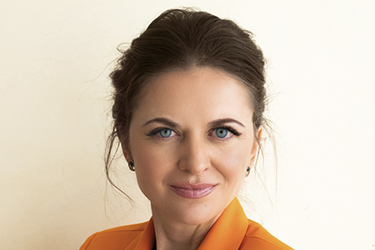
I’ll admit it — when Anna Titkova, MD, Ph.D., MBA first reached out to me about clinical trials in Ukraine, I was skeptical. Not of her, but of the premise. Running trials in an active war zone sounds like something that belongs in a whitepaper thought experiment, not a real-world operational plan. Patients, I assumed, would have bigger things to worry about than study visits.
I was wrong.
Over the course of our conversation, Titkova — the international operations director for Pratia and a clinical researcher who has worked extensively in Ukraine and neighboring countries — walked me through what actually happened to clinical trials when Russia invaded Ukraine in February 2022. What stood out wasn’t just the operational complexity; it was how quickly the clinical research community had to decide whether it would adapt or simply disappear.
When Everything Stopped Overnight
“When the war started, all shipments stopped,” she explained. “Not only investigational products. Everything. No drugs crossed the border.”
For clinical trial patients, particularly those enrolled in oncology studies, the impact was immediate. Ukraine typically held only one to two months of IP inventory nationwide. Once that supply ran out, patients were abruptly informed they could no longer continue in their trials. “It was a real collapse inside the country,” she said.
Within weeks, sponsors, CROs, and sites were forced into crisis mode. Some patients fled Ukraine entirely. Others relocated internally, moving from eastern regions toward the west. Many could not move at all. Each scenario demanded a different solution, none of which existed in SOPs.
Titkova became directly involved in relocating patients to ongoing studies in neighboring countries, including Poland, Hungary, and Bulgaria. In her organization alone, 14 patients were transferred to Polish sites. Across Ukraine, nearly 100 patients were relocated during the early months of the war. “These were not new patients,” she said. “Some of them already had completed multiple visits. You can’t just restart them. They had to continue … or stop entirely.”
Making the Rules While Following Them
The patient transfers raised immediate regulatory and ethical challenges. Ukraine follows EU-aligned clinical trial regulations but is not part of the EU. Informed consent documents were written in Ukrainian, while host-country documents were often in Polish or Hungarian. Visit windows were narrow, sometimes allowing only days between required assessments.
Language barriers quickly became ethical barriers. “How can a patient sign informed consent if they don’t understand the language?” Titkova asked. “That’s not just a regulatory issue, it’s an ethical one.”
At the same time, sites operating inside Ukraine were adapting in real time. IP was shipped directly to patients’ homes, something previously prohibited. Blood samples were collected at home. Sponsors approved protocol deviations. Ethics committees met under emergency conditions. “All of this had to be justified, documented, approved,” she said. “But it had to be done fast.”
Despite frequent references to DCT models, most visits still occurred on site, even during active conflict. “I have photos where there was a bombing in the morning, and two hours later the CRA was on site reviewing source documents.”
Why Ukraine Has Always Delivered Data
To understand why sponsors eventually returned to Ukraine, it helps to understand why they were there in the first place. Ukraine has long offered sponsors a large patient population and high-enrollment potential, driven in part by limited access to reimbursed therapies. “For oncology patients, something like Keytruda was not covered because the price per injection far exceeded the average person’s salary,” Titkova explained.
Thus, for many patients, clinical trials were the only way to access advanced therapies, diagnostic imaging, and consistent monitoring. That reality fueled enrollment and retention, even during wartime. Ukraine also developed a reputation for strong data quality at lower cost compared to Western Europe.
For several years after the invasion, sponsors avoided Ukraine entirely. By 2024, however, the absence began to hurt development timelines and enrollment targets. “After three years, companies realized they were losing big numbers and losing quality,” she said. “They realized how much Ukrainian data mattered.”
More Than Operations
By 2024, smaller biotech sponsors from the U.S. and Asia were the first to cautiously return. Larger pharmaceutical companies followed, often restarting with limited site footprints or narrowly defined protocols. By 2025, multiple sponsors and CROs renewed trial activity and operational support in Ukraine.
The scale remains smaller — roughly 100 new studies per year compared to nearly 300 before the war — but the shift itself is meaningful. Ukrainian sites demonstrated that they could still deliver despite rolling power outages, intermittent internet access, and ongoing security threats. You know how sites in the U.S. are always being asked about their medical-grade refrigerators and dry ice? Imagine having to ensure you had a generator onsite just to run … well, everything. Backup connectivity plans were assumed. Physicians continued seeing patients even as air-raid alerts interrupted daily routines.
“We proved we can do it,” Titkova said. “We adapted to blackouts. We relocated sites. We still have doctors, and we still have patients.”
One ulcerative colitis study underscored the point. While global enrollment lagged, Ukrainian patients actively sought participation, driven largely by word of mouth. Patients reported meaningful improvements in quality of life, reinforcing what had long been true in the region: For many, clinical trials are not an alternative to care — they are the care.
As our conversation continued, it became clear that Titkova wasn’t simply describing operational recovery; she was explaining what happens to a research ecosystem when it is cut off from the global industry for too long. For Ukrainian investigators, losing trials wasn’t just a financial issue. It threatened the continuity of clinical expertise and the future of research infrastructure. “Doctors need to feel they are still part of the clinical research community,” she said. “If we don’t give them even one study, they leave. We don’t want that to be our future.”
In that context, restarting trials became as much about retention as recovery. Keeping even a single study open helped maintain professional identity, clinical momentum, and a sense of purpose for physicians practicing medicine under extraordinary conditions. Patients, too, were looking for more than treatment. Participation offered structure, continuity, and access to care that often did not exist outside a trial.
Much of this work happened without formal crisis playbooks or polished frameworks. It relied on improvisation and trust. For example, generators were often sourced through personal networks, home visits approved under emergency protocols, and deviations justified one patient at a time. “No one asked, ‘Is this in my job description? We all knew that it just had to be done.”
The Mindset Is What Stuck With Me
What struck me most was how little of this story centered on innovation buzzwords. Decentralized approaches (not necessarily a planned DCT) helped, but they weren’t the headline. The real differentiator was mindset. Ukrainian sites didn’t wait for stability or certainty. They worked with what they had because patients didn’t have the luxury of waiting.
It made me realize that resilience in clinical research isn’t built during a crisis — it’s revealed by one (We saw that during COVID, too.). Ukraine didn’t prove that trials can run during war. It proved that when patients matter enough, the system will bend, adapt, and keep moving forward, even when the world around it is falling apart. And if that doesn’t change how we think about “risk” in clinical trials … well, maybe it should.