
Why Africa Could Be The Next Frontier For Clinical Trials

By Dan Schell, Chief Editor, Clinical Leader
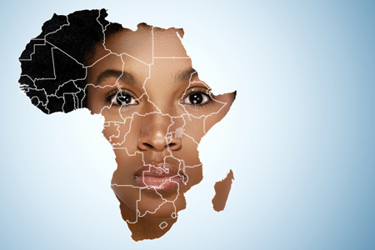
You probably know this already, but I just learned that only about 3% of the world’s clinical trials are conducted in Africa. That statistic has been cited for years, but it took the COVID-19 pandemic to force the global research community to confront what it really means. When vaccines and therapeutics were being developed at record speed, Africa — home to roughly 20% of the world’s population — had limited clinical trial infrastructure ready to activate quickly across countries and therapeutic areas.
The problem wasn’t a lack of capable investigators or patients. It was fragmentation. Dozens of regulators, varying levels of site infrastructure, inconsistent processes, and limited coordination across the continent made it difficult for sponsors to conduct trials at scale.
That’s the gap Tariro Makadzange hopes to close.

I recently spoke with Makadzange — who was introduced to me by Clinical Leader editorial board member Samir Shah, a partner in the effort through his work with the Gates Foundation — about why ACRN was created and how the organization hopes to fundamentally change the way clinical research is conducted across Africa.
Supporting Clinical Development Requires Partners
Although she acknowledges that limited vaccine access is what forced African governments to rethink local manufacturing and regulatory frameworks, Makadzange is quick to point out that manufacturing is only part of the equation. “Even if you do bring in manufacturing, how do you support clinical development?” That question eventually led to the creation of ACRN, a network that is continuously running trials across therapeutic areas so it can rapidly activate when the next crisis hits.
Over the past few decades, significant investments from NIH and other partners strengthened infrastructure in disease-specific areas like HIV and infectious disease. But outside of those areas, Africa remains dramatically underrepresented in global research. That reality is why Makadzange is clear on the path forward to ACRN’s goal: “We strongly feel there’s no way we can do it on our own … we need partners.”
More Than A Network — A Platform
ACRN was formally established about a year and a half ago, backed initially by the Gates Foundation and the Ellison Institute of Technology in Oxford. Makadzange worked with colleagues in Oxford during the pandemic to shape the idea, and early funding allowed them to begin building what she calls not just a network, but a “research platform.”
I quickly understood why that distinction matters.
Africa is not one regulatory environment. It is 54 countries with different regulatory authorities, varying levels of maturity, and diverse requirements. “Not everybody understands how to navigate the different regulators, their strengths, their capabilities,” Makadzange explained.
ACRN aims to de-risk that complexity for sponsors. The team has built a regulatory intelligence function, engaged directly with national regulators, and aligned with continental initiatives such as the African Medicines Agency and the African Free Trade Agreement. These pan-African efforts are designed to reduce fragmentation and harmonize processes over time.
In practical terms, ACRN is standardizing contracting, SOPs, and startup processes across its sites to make activation faster and more predictable. For sponsors used to streamlined global startup models, that consistency can make all the difference.
Six months after launching an expression of interest, ACRN received close to 600 applications from sites and investigators across the continent. After a structured review process, including visits to more than 80 sites in 15 countries, ACRN selected 35 sites to form its initial network.
The composition is deliberate: roughly two-thirds highly experienced sites with strong track records, and one-third emerging sites with strong patient reach and growth potential. Over time, she envisions a more decentralized model that includes physician groups and specialist practices integrating trials into routine care.
A Growing Market
One of the most compelling arguments Makadzange makes is demographic. Africa represents roughly 20% of the world’s population and is the fastest-growing region globally. In a few decades, half of the world’s youth will be African. By the end of the century, nearly a third of the global population could reside on the continent. That is not just a diversity argument, although diversity in drug development is critical. It is also an economic one.
Yet despite that growth, most industry-sponsored trials on the continent have historically been late-phase vaccine or HIV studies. Broader therapeutic areas such as oncology, cardiometabolic, and renal disease remain underrepresented.
ACRN is working to change that, engaging with global pharma and CRO partners to expand beyond traditional infectious disease research. For global health-funded studies, ACRN can function in a near end-to-end capacity — supporting protocol development, regulatory submissions, feasibility, and site management. For industry-sponsored programs, the organization is exploring partnerships with global CROs to provide additional operational depth where needed.
Going Digital From Day One
Perhaps the most intriguing element of ACRN’s model is its digital-first approach. “We don’t have legacy systems that one needs to retrain from or adapt from,” Makadzange said. That lack of entrenched infrastructure, combined with a young and tech-savvy population, creates an opportunity to leapfrog traditional models.
ACRN is building its digital stack from the ground up. With support from Oracle, it has implemented tools for site selection, feasibility, EDC, randomization, and analytics. The organization is actively exploring eSource integration, AI-enabled data query handling, and automation of regulatory writing workflows.
For sites, this means minimizing paper-based processes. For sponsors, it offers cleaner data flows and potentially faster query resolution. For the continent as a whole, it is a chance to avoid repeating the inefficiencies that more mature markets now struggle to unwind.
Interestingly, when ACRN evaluated its initial applicant pool, about half of the sites were still paper-based, while the other half had EHRs in routine clinical care. That opens the door to another opportunity: aggregating EHR data to better understand disease prevalence and patient availability across indications. “If you want to do psoriasis trials, do you actually know that the investigators have psoriasis patients?” Makadzange asked. By building visibility into patient populations, ACRN could make site selection more data-driven and predictable.
Ambition Is Easy … Execution Is Hard
Despite the complexity involved in this whole initiative, Makadzange sees momentum. More than 11 African countries have reached WHO Maturity Level 3 for regulatory systems, signaling strengthening oversight. The African Medicines Agency is beginning to take shape under experienced leadership, and trade agreements are reducing barriers. “There’s really no good reason why more studies are not being done on the continent,” she said.
That is a strong statement, but it reflects confidence built from years of hands-on experience in African clinical research. ACRN is not claiming to solve every barrier overnight. It positions itself as a catalyst — a connector between sites, regulators, global health funders, pharma, and CROs.
The 3% figure is a sobering reminder of underrepresentation. The 15% target is a provocation. Whether ACRN hits that number in a decade remains to be seen. But if the past few years have taught us anything, it is that geographic concentration of research capacity is a global vulnerability. Diversifying where and how we conduct trials is not just a fairness issue; it is a resilience strategy. And Makadzange is betting that Africa is ready to be more than an afterthought in global drug development.