
Aggregate Spend
AGGREGATE SPEND ARTICLES
-
 Fast-Tracking FIH To PoC: Strategies For Accelerated Drug Development
Three factors often decide success or failure in FIH studies: integrating biomarkers and pharmacodynamic endpoints, including patients in the trials, and leveraging purpose-built manufacturing infrastructure.

AGGREGATE SPEND SOFTWARE WHITE PAPERS AND CASE STUDIES
-
 Water Reclamation Facility Streamlines Equipment For Improved Function
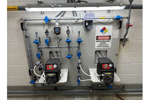
A water reclamation facility in Carol Stream, Illinois, optimized its equipment layout using Blue-White’s FLEXFLO® M2 metering pumps and CHEM-FEED® wall mount systems, improving functionality, reducing piping complexity, and saving space for a more efficient operation.
-
 RO Protection At Formosa Plastic Group, Taiwan
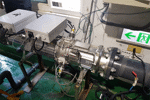
In this case study, learn why Formosa Plastics Group in Taiwan used Atlantium Technologies' HOD UV system to protect RO membranes from biofouling, resulting in cost savings and plans for further installations.
-
 Increasing Productivity On The Production Line With Laser Power Measurement
Dive into how one company's adoption of reliable laser output measurement on its production lines led to increased productivity and cost-efficiency.

AGGREGATE SPEND PRODUCTS
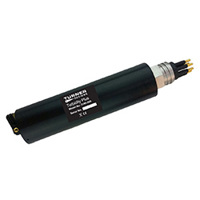
Turner Designs turbidity sensors provide accurate, stable measurements of suspended particulates in natural waters. With low power requirements and a compact design, they integrate easily into process control or field platforms. Rated to 200 meters, these sensors support sediment transport studies, water clarity monitoring, and coastal change research, delivering reliable turbidity data in real time.

Avance Clinical offers deep scientific expertise and extensive knowledge across a range of specialized therapeutic indications, consistently achieving global regulatory approvals.
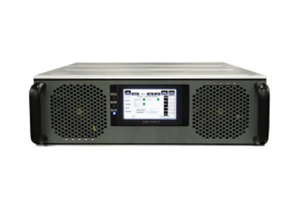
The Empower RF Model 2240 is engineered for robust pulse and continuous-wave (CW) applications within the C-band frequency range and efficiency in a compact 3RU form factor.
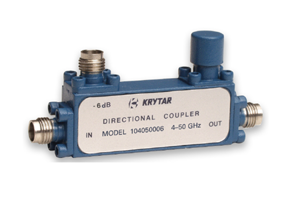
KRYTAR's 4-50 GHz directional couplers are crafted for system applications necessitating external leveling, precise monitoring, signal mixing, or swept transmission and reflection measurements.

Ensuring you have equipment that accurately and rapidly assembles syringes and cartridges is crucial to the success of your pharmaceutical manufacturing workflow. The Hull i-Dositecno SY pharmaceutical labeling machine harnesses dual-function robotics for plunger insertion and labeling to ensure the safety and sterility of your product.
- Versatile – ideal for syringes or cartridges in sterile, clean, ready-to-fill (SCF) tubs
- Cleanroom ready
- Fully compliant – 21 CFR Part 11 software and IQ/OQ validation packages available
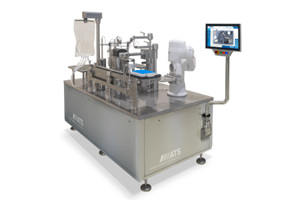
Fast-track your market entry with our robust aseptic filling platform. The Flex-Line™ Robotic Filler provides full integration of Scientific Products filling and Comecer isolation technologies for a seamless process from order through Validation.

Protect your pharmaceutical products from any potential damage during their line transit. Integrate nests or trays into your line transport processes with our flexible, customizable options.
AGGREGATE SPEND SOFTWARE NEWS
-
QuasarMD Unveils Advanced Full-Body Light Therapy Mat To Support Aging Wellness7/29/2025
QuasarMD LLC, a leader in light-based wellness technologies, announces the launch of its Full-Body Light Therapy Mat, a clinically validated, non-invasive solution designed to address the evolving wellness needs of aging adults.
-
Evonik Partners With ST Pharm To Increase Its Offerings For RNA And Nucleic Acid Delivery1/8/2025
Evonik is partnering with ST Pharm, a company that manufactures active ingredients for gene therapy, to expand its RNA and nucleic acid therapeutic services.
-
Quantum Biopharma Announces Signing Of An Agreement With A Global Pharmaceutical Contract Research Organization To Prepare An IND (Investigational New Drug) Application Package For Lucid-21-302 (Lucid-MS), A First-In-Class Treatment For Multiple Sclerosis5/20/2025
Quantum BioPharma Ltd. (NASDAQ: QNTM) (CSE: QNTM) (FRA: 0K91) (“Quantum BioPharma” or the “Company”), a biopharmaceutical company dedicated to building a portfolio of innovative assets and biotech solutions, today announces that it has signed an agreement with a global pharmaceutical contract research organization to prepare an IND (Investigational New Drug) application package for Lucid-21-302 (Lucid-MS) with the US FDA.
-
Shell Expands Gulf Of America Leadership Position With Dover Development4/8/2025
Shell Offshore Inc. (Shell), a subsidiary of Shell plc, today announced the start of production at Dover, the second subsea tieback connecting new wells to the existing infrastructure of the Shell-operated Appomattox production hub in the Gulf of America.
-
Baden-Württemberg's Largest Solar Park Now In Operation5/28/2025
EnBW has commissioned its solar park in Langenenslingen-Wilflingen (district of Biberach in the southwest of Germany).
ABOUT
Aggregate Spend
Aggregate Spend refers to the process used to aggregate and monitor the total amount spent on organizations and individual healthcare professionals by healthcare manufacturers. The amount spent is aggregated in terms of payments made, honoraria, gifts, travel and other means. Aggregate spend is also known as the Physician Spend Sunshine Law which is an initiative that is aimed to achieve transparency in life sciences industry, the benefits of each physician as well as to limit spend per physician. The law is a body of state and federal legislations. Passing of this law was also in effort to alleviate the conflicts of interest between pharmaceutical and medical device companies and healthcare professionals.
The process requires that manufactures of various medical devices, drugs, biological and other supplies recorded all payments made to physicians including any other transfers of value to teaching hospitals and physicians. Report regarding all this information is required to be produced annually by all the applicable manufacturers and suppliers. The manufacturers are required to include details such as date, nature of payment and the value. Penalties are charged in case of breaching this law by the target parties.
By doing this, accountability of individual physicians and medical device, pharmaceutical and life sciences companies can be achieved. The challenge now is to the life science companies to address the reporting requirements and more so now that state and federal regulatory agency continue to enact legislation that require more auditing of monetary transactions to physicians and organizations involved in healthcare management. As a result many companies are now working more diligently to address compliance and gain more competitive advantage through reputation management among other ways.