
The Industry Talks Access — Fabian Sandoval Builds It

By Dan Schell, Chief Editor, Clinical Leader
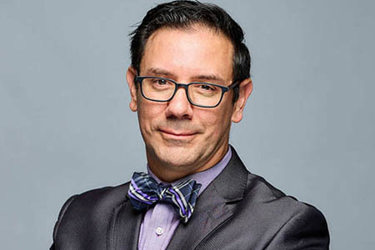
Not long after wrapping up my conversation with Kelsey Powell, I found myself thinking about a certain type of person who seems to show up again and again in this industry. Call them Type A, high-achieving, slightly relentless — the kind of people juggling multiple initiatives that, at first glance, feel unrelated until you realize they’re all solving the same problem from different angles. Powell fits that mold, and so does Fabian Sandoval, who, as far as I know, is the only site owner walking around with multiple Emmy awards on his résumé (for his long-running health TV program, Tu Salud Tu Familia).
Based in Washington, D.C., Sandoval, CEO and medical director of Emerson Clinical Research Institute, isn’t working on one solution to improve clinical trial access and awareness … yeah, you guessed it, he’s working on several at once. But like I said, although they may look disconnected on paper, they are tightly linked in practice.
An Innovative Idea To Site Placement
Sandoval’s approach to diversity starts with a simple premise: If patients aren’t coming to research sites, the sites need to go to them, which is why his team has built partnerships with consulates (remember, he’s based in D.C.) representing multiple Latin American countries. These are not healthcare environments, but places people visit for routine administrative needs, which makes them an ideal, if unconventional, setting for outreach.
Instead of leading with clinical trial recruitment, Sandoval’s team offers education and basic health screenings, including blood pressure checks, diabetes awareness, and eye exams. The goal is not to pitch but to engage, creating an environment where trust can develop naturally over time. And we all know, trust is in short supply these days, especially in our industry. “Oftentimes, people going to a consulate are just sitting around waiting for an appointment. So, while they wait, we can educate them on issues and medical conditions we know they can relate to,” he told me.
From there, patients who express interest can move further into the funnel, but that step only happens after trust has been established. That distinction matters, especially in communities that may already be wary of the healthcare system. “We give them a lot of free services,” Sandoval said. “You can’t go in there selling anything. You can’t go peddling stuff.” That approach has paid off, as word has spread among consulate leaders, allowing the model to expand organically without the need for traditional marketing or outreach campaigns.
Building on that success, Sandoval applied the same community-first strategy to other populations, most notably through a new clinical research facility embedded within an AME Zion church community. The site, currently in development, will operate inside or adjacent to a large African-American church, offering a setting that feels both familiar and trusted to the people it serves.
The opportunity emerged through ongoing outreach rather than a formal proposal, as his team had already been working within the church community by conducting education sessions, screenings, and patient registration efforts. That groundwork led to a deeper partnership.
To me, this is an example of being “innovative” as a site owner. Sandoval created a fundamentally different model for site placement, one that prioritizes trust and accessibility over convenience for sponsors or traditional infrastructure considerations.
Awareness Isn’t A Campaign — It’s A System
Remember how I said all of his projects, no matter how disparate, we're still somehow connected? I believe that common thread is his belief that awareness is not a one-time effort but an ongoing process that requires constant reinforcement. That philosophy is reflected not only in a patient engagement platform his team has been developing with Medidata, but also in his TV program, Tu Salud Tu Familia (Your Health, Your Family), which promotes health and wellness in the Latinx community while reinforcing the importance of diversity and inclusion in clinical trials. The show has been on the air for roughly seven years, airing every Saturday morning (depending on the market), and has produced nearly 250 to 300 episodes.
However, Sandoval is quick to point out that neither technology nor media alone can solve the awareness problem, particularly when the underlying issue is a lack of continuous engagement. “I always hear education, education,” he said. “But it’s really the style of education you offer and the cadence.”
That realization has driven his team to adopt a layered approach to education, using television, radio, and social media to reach different segments of the population. Each platform serves a specific purpose, ensuring that the message is delivered in a way that resonates with the intended audience rather than relying on a single method to reach everyone.
In fact, the TV show, despite its reach and longevity, isn’t designed as a direct recruitment tool, and Sandoval is candid about its impact on his business. “It really doesn’t benefit the site, but it helps me morally.” I loved that comment, because building awareness and trust often requires “investments” that don’t produce immediate returns but are essential for long-term impact.
Committed Staff For A Unique Site
Despite this range of initiatives, Sandoval attributes much of his success to one factor: the people executing the work. “Your staff have to believe in the mission, and every single one of my staff does. We know it because we've seen it firsthand. We have relatives that have gone through doctors and not been able to understand what's going on with treatment. We've had sisters who have been in research studies that have required them to seek help. So, I think the secret sauce to our success is our staffing. It’s knowing exactly which staff is best for each type of activity or event.”
At a certain point, it becomes clear that Sandoval’s organization does not fit neatly into the definition of a traditional clinical research site, as it functions just as much as a community outreach organization, a media platform, and a healthcare access point. His team has even introduced a low-cost health plan for individuals without insurance, further expanding the ways in which patients can engage with the system.
While these initiatives may appear fragmented at first, they are all designed to address the same underlying challenge: Clinical trial participation begins long before a patient is approached about a study. It starts with awareness, trust, and access, and without those elements in place, recruitment efforts will always fall short.
Sandoval is not waiting for the industry to solve that problem. Like Powell, he is tackling it from multiple angles at once, not because it is the simplest approach, but because it is the one most likely to work.