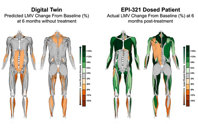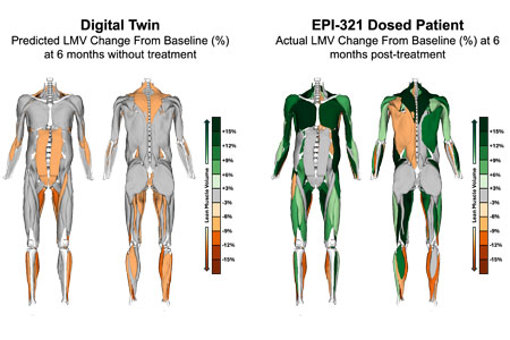
Digital twins can transform trial design by making data more robust and alleviating patient burden. In this interview, Epicrispr CEO Amber Salzman, Ph.D., shares how the company's using it to reliably predict muscle volume change in their trial for a FSHD gene therapy.


- Navigating The New EU Pharmaceutical Legislation: Key Implications For Pediatric Drug Development
- Why Life Science Tech Pilots Fail After The Demo — And How To Avoid It
- The Profit Margin Double Standard That Needs To Change
- Why The Governed Hybrid Site Model Is Strategically Superior — Part 3
- Beyond The IND Clock: What Operation TrialBlazer Gets Right — And Where It Stalls (Part 1)
- Beyond The IND Clock: The Legal Architecture Of QRIs And What Industry Must Say Before July 22 (Part 2)
- Project Management And AI: What Should Be Automated And What Should Not
GUEST COLUMNISTS
-
") Beyond The IND Clock: The Legal Architecture Of QRIs And What Industry Must Say Before July 22 (Part 2)
Beyond The IND Clock: The Legal Architecture Of QRIs And What Industry Must Say Before July 22 (Part 2)The FDA's Operation TrailBlazer includes a proposal to speed up IND review and approval. But Kimberly Chew and Odette Hauke say its legal architecture is unresolved and reveals compliance issues that are hard to ignore.
-
 Project Management And AI: What Should Be Automated And What Should Not
How can clinical research project management be optimize by AI? To determine its best fit, consultant Jason C. Bork assess AI's utility in project management through the lens of Plan, Do, Check, Act (PDCA).
-
 How Clinical Research Site Operating Models Perform in Practice – Part 2
In part two of this three-part series, Paradigm Clinical Research CEO Kurt Mussina evaluates how each site operating model performs regarding speed, patient access, investigator engagement, quality, accountability, and scalability.
-
 Why Operating Model Is The Next Competitive Frontier In Clinical Research Site Strategy – Part 1
In this three-part series, Paradigm Clinical Research CEO Kurt Mussina discusses the meaningfulness of a site's operating model to clinical trial sponsors. In part one, he first defines operating model types.
-
 Before AI Can Transform Clinical Trials, It Needs More Patient Data
King’s College London Professor Maddy Parsons says AI won't improve clinical trials — unless researchers begin collecting richer biological data, embracing diversity, and treating every clinical trial as learning opportunity.
-
 How One Researcher's Personal Study Experience Is Helping Him Better Serve Patients
Regeneron Executive Director in Clinical Sciences Kaniel Cassady, Ph.D., reflects on how his industry experience shaped his expectations, questions, and interactions as a patient in a clinical trial and how his patient experience is reshaping his clinical work going forward.
-
 i-Cubed Used End-To-End AI In A Proof-Of-Concept Trial. Here's What They Learned
Discover how well AI fared in document generation, patient engagement, data integration, and more in an end-to-end proof-of-concept study run by i-Cubed.
-
 Social Media Is Replete With Patient RWD, But How Can Researchers Best Use It?
Pistoia Alliance's Thierry Escudier and Aditya Tyagi discuss how social media listening is used in clinical research, how it supports established evidence-generation methods, and how it can become a credible, structured input for drug development.








CLINICAL TRIAL WHITE PAPERS
-
 Beyond The Benchmark: Innovative Trial Designs Transform Research
Adaptive designs, decentralized models, and AI insights are reshaping trials — boosting efficiency, speeding timelines, and strengthening evidence amid evolving regulations and funding pressures.

-
Outlook Good For 7 Drugs Up For Q3 Review8/15/2024
A total of 24 drugs, devices, diagnostics, and deals are expected to progress in the third quarter of 2024, including approval applications for 17 drugs. The estimated overall likelihood of approval is 90% or higher for seven of those drugs, including revumenib for acute myelogenous leukemia and KarXT for schizophrenia.
-
Radiation Therapy Quality Assurance In Clinical Trials8/22/2024
Here, the authors describe the crucial role of radiation therapy in oncology trials and how a robust quality management program can enhance treatment outcomes and research efficacy.
-
Capital Efficiency In Cardiovascular Outcomes Trials7/8/2026
New modeling shows aligning clinical and manufacturing operations in heart trials can cut costs, speed timelines, and boost expected program value.
-
Real-World Value Realized From DHTs In Clinical Trials10/22/2024
Explore four real-world examples of clinical trials that successfully integrated DHTs. Each case study highlights how DHTs impacted specific aspects of trial design.
-
Implications Of Assessing Overall Survival In Oncology Studies3/25/2026
New oncology standards mandate pre-specified survival analysis to catch long-term harm. Learn how to implement hazard ratio thresholds and the ICH E9(R1) framework for global compliance.
CLINICAL TRIAL APP NOTES & CASE STUDIES
-
Enhance Access And Improve Retention In Rare Disease Trials With HTS4/17/2025
Home Trial Support (HTS) provides a solution to improving participant recruitment and retention during musculoskeletal studies.
-
Automated Trial Monitoring Workflows Make A Lean Team More Efficient1/7/2026
A pharmaceutical therapy developer was looking to automate reports, confirmation letters, and follow-up letters. See what happened when they adopted a cloud-based solution for end-to-end trial management.
-
Drug-Drug Interaction Study On A Novel Cardiovascular Medication9/17/2024
Learn how Altasciences leveraged its expertise to design, recruit, and conduct complex DDI studies, assessing pharmacokinetic and pharmacodynamic impacts of co-administered drugs.
-
Optimizing Wearable Adherence In A Phase 3 Oncology Trial5/15/2026
Long-term wearable monitoring only works if patients keep wearing the device, and in oncology trials, that’s easier said than done.
-
Targeted Indication Selection Using Adaptive Design8/12/2025
What is a Simon 2-stage design, and how was it used to enable each tumor-specific cohort in a Phase 2, multi-cohort oncology trial to be independently assessed for objective response rates?
-
Redefining Accessibility For Pediatric Patients9/24/2025
Explore how meeting patients where they are can redefine what successful pediatric trial delivery looks like.
NEWSLETTER ARCHIVE
- 07.14.26 -- A Role-Play Conference Session That Reframes The Data Manager's Job
- 07.14.26 -- How Life Sciences Leaders Are Building Scalable Operations
- 07.13.26 -- Safer ADCs- Enabling Higher Effective Dosing
- 07.11.26 -- Clinical Leader Newsletter - Best Of June
- 07.10.26 -- Accelerating Trial Execution With AI And Real-Time Data

RECRUITMENT AND DIVERSITY
This section includes some helpful resources regarding patient recruitment and diversity in clinical trials, including this link to the FDA's guidance on diversity action plans.
-

Informed consent has never been solely about documentation, but some sponsors has treated it as a checkbox exercise. Here, consultant Tasha Mohseni shares tips and fixs for how best to approach informed consent.
-

Regeneron Executive Director in Clinical Sciences Kaniel Cassady, Ph.D., reflects on how his industry experience shaped his expectations, questions, and interactions as a patient in a clinical trial and how his patient experience is reshaping his clinical work going forward.
-

AI is changing the way clinical trial trials are discussed, planned, and designed. But even with an improved protocol, are AI-enhanced trials driving better enrollment?



FOCUS ON PATIENTS
-

Digital twins can transform trial design by making data more robust and alleviating patient burden. In this interview, Epicrispr CEO Amber Salzman, Ph.D., shares how the company's using it to reliably predict muscle volume change in their trial for a FSHD gene therapy.
-

Regeneron Executive Director in Clinical Sciences Kaniel Cassady, Ph.D., reflects on how his industry experience shaped his expectations, questions, and interactions as a patient in a clinical trial and how his patient experience is reshaping his clinical work going forward.
-

The American Diabetes Association 2026 conference showed where we are and where we're going with GLP-1 therapies.